
OBITUARY
David Edward Starrett
December 3, 1926 – November 4, 2020
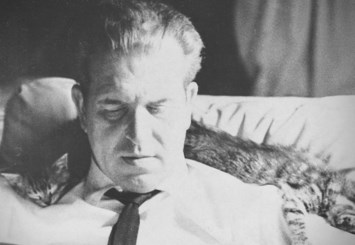
Denver psychiatrist and psychoanalyst David E. Starrett worked tirelessly to provide better, more comprehensive and affordable mental health care for more than 50 years. He knew the importance of mental health and treatment for people in all walks of life.
David died of congestive heart failure on Nov. 4, 2020. He was in home hospice care at the time. He requested that there be no service.
Born in Oakland, California, David grew up and graduated from high school in Seattle, Washington. He joined the army at 17 in 1944. He scored highly on various tests, so the army chose him for specialized training in civil engineering. He was part of carrying out the Marshall Plan in Italy, working with the state department in Naples and Rome to sell discounted American equipment to the struggling Italian government. He did such a fine job that on weekends they sent him to Algeria to do the same.
While in Rome, he met and fell in love with Grace Iverson, a secretary working for the U.S. Department of State. When he returned to the U.S., he did his pre-med studies at University of Washington in Seattle and then entered medical school at Washington University in St. Louis, Missouri. David and Grace were married in 1949 when he was a sophomore in medical school. He graduated in 1952 and did his internship and an additional year of internal medicine residency at the Highland-Alameda County Hospital in Oakland, California. In 1954, David and Grace moved to Denver where he began his psychiatric residency at the University of Colorado. He graduated in 1957, joining the staff of the department of psychiatry and working the outpatient clinic supervising residents and managing patients. He was Board Certified in psychiatry and neurology in 1959.
In 1960, David became director of the Mental Health Division of the Denver Department of Health and Hospitals. The following year he was asked to take over the psychiatry service at the Denver Veterans Hospital, where he was appointed Associate Chief of Staff for Mental Health and Behavioral Sciences. His position allowed him administrative flexibility to provide better patient services. This is a central theme throughout David’s career. He retired from the VA as Deputy Chief of Staff in 1994.
David commuted to Chicago every other weekend to study psychoanalysis at the Chicago Institute for Psychoanalysis. In 1964 he thought the cost of study and subsequent required psychoanalysis for himself should be tax-deductible, but the IRS thought otherwise. He sued them and won with no dissenting opinions from the judges. He was always a man who worked to complete his goals no matter the difficulties along the way.
He worked constantly to improve the delivery of mental health care to Coloradans. During the 1960s and ‘70s David was an original member and later chair of Governor’s Advisory Committee for the development of the Fort Logan Mental Health Center. He was founder, president and vice president of the Denver Mental Health Center, a private clinic with scaled fees designed to provide low-fee psychotherapy for Denver residents. Additionally he served on numerous state and city committees that allowed David to play an early and significant role in the development of psychiatric services in the region. He was founder and chair of the Mental Health Resources Coalition and founder and chair of the Colorado Association for Directors of Psychiatric Inpatient Units.
At the VA, David developed an innovative psychiatry program that could integrate with the community to provide comprehensive services to veterans. He started a drug and alcohol program, expanded the outpatient services and started a day hospital and an emergency psychiatric service. In 1973, he founded and was president of Transition, Inc., a half-way house and rehabilitation program for discharged vets. In 1974 he took the added responsibility of director of the inpatient division of Colorado Psychiatric Hospital. As a Clinical Professor of Psychiatry, he enjoyed teaching and mentoring residents in clinical practice and in the history of psychiatry. David was a member and later chair of the Midwestern Regional Planning Board for the Department of Veteran Affairs. At one time he was a Special Master for the U.S. District Court. He was often called upon to intervene in difficult clinical, administrative or personnel issues that were causing problems that couldn’t be remedied at the local hospital level. David delighted in using his psychiatric skills in diagnosing dysfunctional organizations and then helping to find remedies.
David had a private practice for many years and continued to see private patients until about 10 years before his death.
He was principal author and recipient of a $12 million Robert Wood Johnson Grant for the development of services for the Chronically Mentally Ill in Denver in 1987. He administered the grant and developed a Citizens Advisory Group. The program became the Denver Mental Health Corporation. David was awarded the Fletcher Gaylord Advocacy award in 1992 by the Mental Health Association of Colorado for his continuing work to improve psychiatric care. This particular award earned him letters from Pat Schroeder and Dan Schaffer, both U.S. Representatives from Colorado. He was especially noted for building quality psychiatric services and for promoting insurance parity for psychiatric patients.
David was awarded the American Psychiatric Association Warren Williams Award for his work in 1987. He was a Distinguished Life Fellow of the APA.
David served as a board examiner, member of the board of trustees, and president of the Colorado Psychiatric Society, which honored him with a Lifetime Achievement Award in 2007.
David and Grace traveled extensively throughout the world. They visited Italy and Sicily as often as possible. During his career he was an avid fan of opera and a voracious reader of modern political biography, military history, and medieval history. Once he actually retired, he studied quantum physics. His interests were vast as was his library, and he lamented that he hadn’t learned as much as he wanted. During his last weeks, he often asked about the health and happiness of each of his children, their spouses and kids. He always took care of Grace. Despite a demanding and sometimes fearsome reputation among colleagues, students, and the lawyers and politicians with whom he worked throughout his career, Grace has said that the word that best described him was “gentle.”
David is survived by his sons: John a retired mathematics professor and musician (Marilyn), Bob a retired attorney, Gregg a professor of anthropology (Martha). His wife Grace followed him in death December 2, 2020. Daughter Carol (Michael) died in 2019 after an automobile accident. His three grandchildren are Jesse Patrick, Katherine Starrett Banister, and Paul Starrett.
In lieu of flowers, please donate is his honor to Denver Hospice, Bethesda Foundation in Centennial, Mental Health Colorado or a charity of your choice.
Show your support
Add a Memory
Share Obituary
Get Reminders
Services
SHARE OBITUARYSHARE
- GET REMINDERS
v.1.18.0