
OBITUARY
Dr. J Edward "Ed" Anderson
May 15, 1927 – February 3, 2026
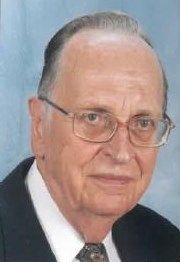
Dr. J. Edward “Ed” Anderson died February 3, 2026, at the age of 98. A visionary engineer, educator, and public intellectual, his life reflected his profound commitment to the pursuit of knowledge, innovation, and devotion to inspiring others.
Born May 15, 1927, in Chicago to Oscar and Ruth (nee Engstrom) Anderson, he was one of five siblings. His parents served as missionaries in China with the Swedish Evangelical Covenant Church of America, and he spent much of his early childhood there—an experience that helped shape his lifelong global perspective and enduring concern for human welfare.
After serving in the U.S. Navy during World War II, Dr. Anderson earned a bachelor’s degree in mechanical engineering from Iowa State University. He obtained a master’s degree from the University of Minnesota, and a Ph.D. in aeronautics and astronautics from the Massachusetts Institute of Technology. His doctoral thesis was selected by MIT Press for publication, the sole thesis chosen from more than 200 that year.
He began his professional career at NASA’s Langley Research Center in Virginia. After relocating to Minneapolis, he worked at Honeywell where he designed advanced instruments and spacecraft systems. His contributions to gyroscopes, lasers, and autopilot systems were used in both commercial and military aircraft.
Driven by a desire to teach and to engage more directly in the societal consequences of technological choices, Dr. Anderson left industry for academia. From 1963 to 1986, he served as a distinguished professor at the University of Minnesota, and from 1986 to 1992 at Boston University. He taught mechanical engineering, aeronautics, sustainability, and mass transportation, earning a reputation as an inspiring and accessible teacher.
Reflecting his interdisciplinary interests, Dr. Anderson developed a groundbreaking course, Ecology, Technology and Society, which examined the ethical and environmental dimensions of technological decision making. More than 4,000 students participated in the course at the University of Minnesota. It was later adopted by universities nationwide and continues today in various sustainability focused forms.
During a 1967–1968 sabbatical, Dr. Anderson was a National Academy of Sciences exchange professor at the Institute of Heat and Mass Transfer in Minsk, then part of the Soviet Union. Beginning in the late 1960s, he became deeply involved in research on Personal Rapid Transit (PRT), an innovative approach to mass transportation emphasizing safety, affordability, and environmental responsibility – principles that anticipated today’s sustainability movement. Through collaborations with planners and scientists worldwide, he emerged as a leading global authority in the field.
A nationally recognized expert in inertial guidance systems, Dr. Anderson was an outspoken critic of the accuracy of the MX missile defense tracking system. In 1981, his analysis led to national media attention and testimony before members of Congress and senior defense officials, including the Secretary of the Air Force. His testimony was regarded as influential in the government’s decision not to proceed with MX tracking the system.
In recognition of his work, Dr. Anderson received numerous honors and awards. In 1989, he was named an Outstanding American Inventor by the Intellectual Property Owners Foundation. In 2001, he was elected a Fellow of the American Association for the Advancement of Science and received its Scientific Freedom and Responsibility Award. In 2010, he received the Charles W. Britzius Distinguished Engineer Award from the Minnesota Federation of Engineering, Scientific and Technical Societies.
A widely sought-after lecturer and speaker, Dr. Anderson, was admired for his rare ability to explain complex scientific ideas to non-experts. He authored hundreds of technical papers, wrote three books, and served on numerous civic, educational, religious, and scientific boards.
He is survived by his cherished wife of 50 years, Cynthia (nee Howard). They shared a love of literature, music, travel, and sailing.
In Colorado, he is survived by his daughter, Candice Munsinger, grandchildren Nathan and Michael, great grandchildren Anayah, Mariah, Edward, Scarlette, and great great granddaughter Victoria. In Minnesota, he is survived by his sons James and Stanley (Suzanne), grandchildren Scott (Monica) and Brittany, and great grandchildren Brayden, Taiden, Liam, Camryn, Brantley, Nathan, Noah, and Harper.
A memorial service will be held Friday, May 15, from 10:30 a.m. to 1:00 p.m., with the program beginning at 11:00 a.m., at the Moore Lake Community Building, 5890 Central Avenue NE, Fridley, Minnesota. Refreshments will be provided.
His memorial will be on what would have been Dr. Anderson’s 99th birthday.
In lieu of flowers, memorials may be made in his name to Citizens for Global Solutions, 5 Thomas Circle NW, Washington, DC 20005.
He will be remembered with much love and deep respect by his family, friends, colleagues, and the many students whose lives he enriched through his generosity, intellect, and unwavering belief in the power of education.
Show your support
Add a Memory
Share Obituary
Get Reminders
DONATIONS
Citizens for Global Solutions5 Thomas Circle NW, Washington DC 20005
Services
SHARE OBITUARYSHARE
- GET REMINDERS
v.1.18.0